Governance That Sticks: What the Dalian Panel Added to the Accountability Argument
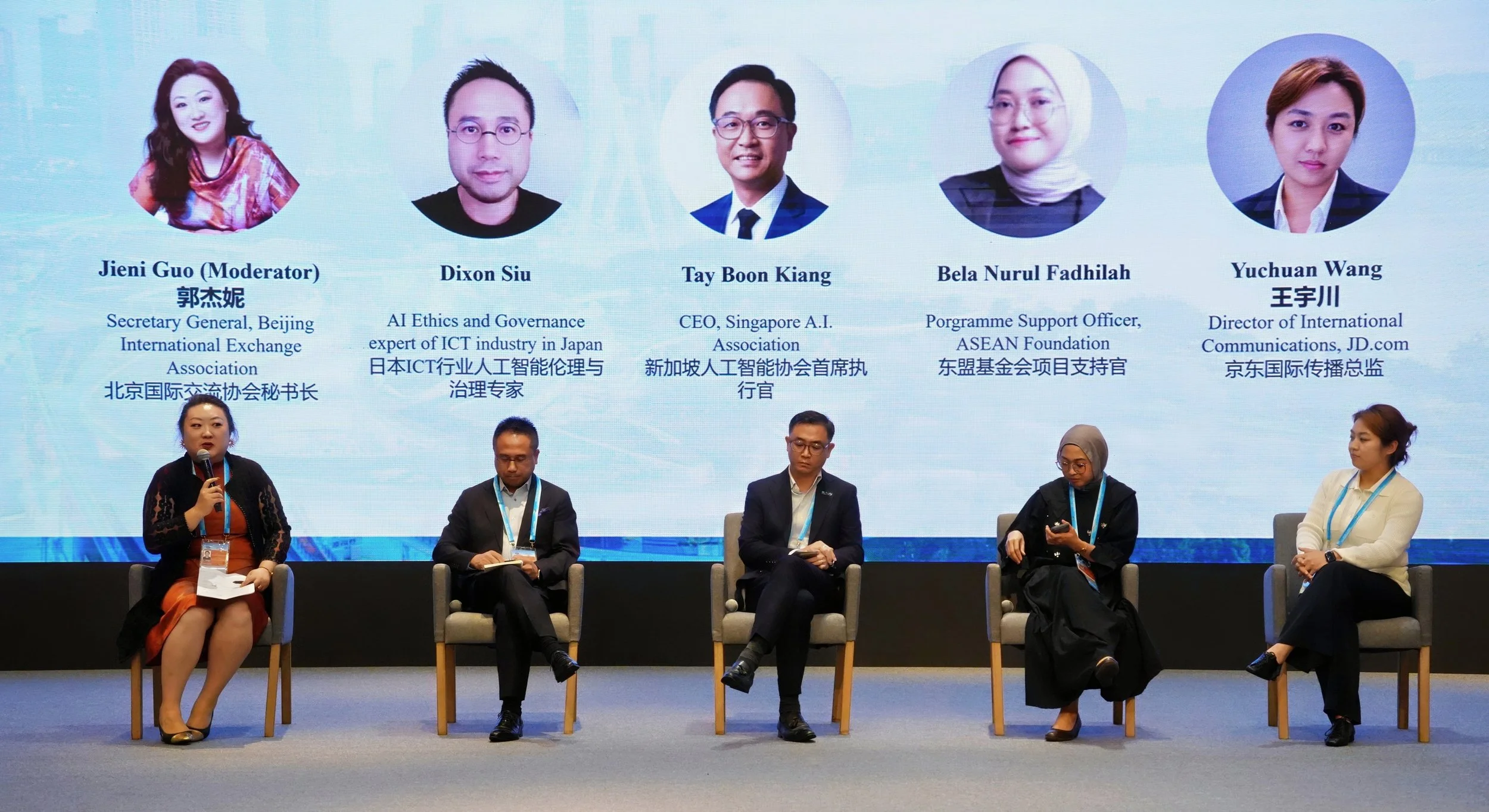
Panel Discussion: Public-Private Partnerships for AI for Good - Sharing Practices and Pathways from July Workshop
燊思想 — Dixon's Thoughts on AI, Ethics & Digital Rights · 5 min read
Weeks after Shenzhen, I found myself on another AI governance panle, this time at the APEC Tech for Good Workshop in Dalian on August 21. At the panel discussion, I shared the following insights from my career experiences.
Compliance is not the same thing as understanding
The first question from the host was the one I keep getting asked in some form at different conferences: many economies already have AI ethics principles. so what exactly moves governance from a document to something that prevents harm before it happens.
My answer has stayed consistent all summer, but Dalian sharpened one part of it. A review board with real authority to halt a launch matters, and I have written about the structural side of that elsewhere. What I emphasised on this panel is the layer underneath the structure: a review process only works if the people around it actually understand why it exists.
Policies, audits, and regulations can become box-ticking exercises if the people executing them have never had to sit with the question of what harm actually looks like. So I framed the answer around four roles that each need a different piece of that understanding, not just a different set of instructions.
The solution provider needs engineers and product leads who can spot foreseeable harm while a product is still being designed, not compliance staff catching it after the fact. Ethics has to be built into the design, not bolted on at the end.
The enterprise customer needs to see trustworthy AI as a value proposition, not an added cost. A product that is reliable and safe earns customer confidence and carries less reputational risk. Governance, framed this way, is part of what the product is worth.
The end user needs enough AI literacy to understand why some applications carry stronger safeguards than others. People who understand the potential harm are far more willing to accept that certain AI should be governed more strictly rather than simply made available.
The regulator still sets the floor and the consequences for ignoring it. That part does not go away. It just works better once everyone underneath it already understands the point.
The line I used to close that answer: the real question is not only whether we have mechanisms to enforce AI ethics, but whether the people who design, procure, deploy, and use AI understand why those mechanisms are necessary. Get that right, and governance stops being a voluntary principle or a compliance exercise. It becomes a shared culture of accountability.
Regulate the risk, not the technology
The second question was the familiar one about drawing a line between innovation and misuse, using synthetic media as the example. It is the same reframe I have used since Shenzhen: sort by what the technology is used for and who could be harmed, not by whether the technology itself sounds dangerous. Low-risk, clearly beneficial uses should have room to move fast. Anything involving serious, foreseeable harm needs stronger safeguards, and in some cases, outright prohibition.
First, the line should not be drawn by technology companies or regulators alone. Citizens need enough AI literacy to understand the tradeoffs well enough to participate in deciding where stronger controls are genuinely warranted. That participation is also what gives those controls their legitimacy once they exist.
Second, chasing zero risk is its own failure mode. Trying to eliminate all risk would eliminate a great deal of valuable innovation along with it. Regulation should set a floor, minimum protections for the applications that carry real, foreseeable harm, while leaving room above that floor for responsible experimentation. The objective was never risk-free AI. It was always the responsible management of the risk we can actually see coming.
The gap in my own answer
Put the two answers together and the message is consistent with everything I have argued this summer: AI governance should not be about stopping innovation, it should be about making responsible innovation the norm. Understanding is what makes accountability stick. Proportionate, risk-based thinking is what tells you where to point it.
But there is a group my answer in Dalian did not name directly, and it is the group most of my own work centres on. A child cannot participate in the kind of shared understanding I described for the enterprise customer or the end user, not the way an adult user can. That does not mean children sit outside the conversation. It means the safeguards, the literacy efforts, and the design-stage harm assessments have to be built specifically for that reality, not simply inherited from a framework designed with adult users in mind.